 EN
EN  RO
RO  HU
HU 
Neonatal metabolic disease screening
Screening is necessary because many metabolic diseases can be kept fully under control if they are detected in time, whereas neglecting them causes serious complications.
What is the essence of newborn screening for metabolic and hereditary diseases?
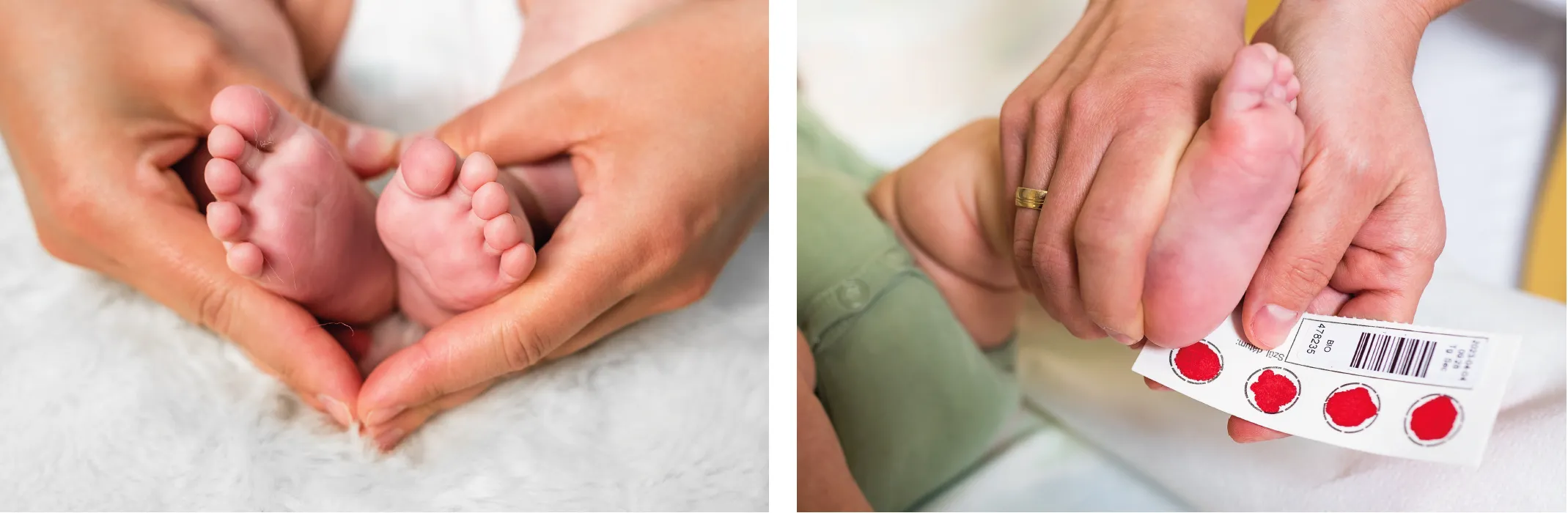
In most European countries, screening for metabolic and hereditary diseases is free and compulsory. In Romania such screening was introduced in 2009 and is currently carried out for only three types of metabolic and hereditary disease – phenylketonuria, congenital hypothyroidism and, more recently, cystic fibrosis – in contrast with most European countries, where such screening covers around 20 to 30 diseases. In Romania, recognising the importance of metabolic screening is left to the parents. In most neonatology departments, a sample can be taken at the parent’s request, for a fee, for extended metabolic screening of the newborn. The procedure consists of collecting a few drops of blood onto a special paper in the neonatology department, and then sending the sample to our research laboratory, where tests are carried out for more than 47 metabolic and hereditary diseases.
Why is this test important for my child?
Neonatal metabolic screening is a very important step in making sure that your baby is healthy and can safely be discharged from the maternity unit. These tests can provide information about serious diseases whose symptoms do not appear in the first few days. Symptoms may appear weeks or months later. By recognising these diseases early and treating them appropriately, we can give children a healthy life.
How is the test carried out?
We take a few drops of blood from the baby’s heel onto a filter paper. Taking the blood is safe and poses no danger to the baby. The blood sample is transported to the metabolic screening laboratory. We carry out the necessary tests there within a few days. If we find an abnormal result, we report it to the institution that took the sample, to the doctor and to the child’s parents.
Which diseases is my child tested for?
The sample is tested for diseases that arise from problems in the body’s energy supply or in hormone production. Such diseases include aminoacidopathies, disorders of fatty acid metabolism, abnormalities of organic acid metabolism, and hereditary or endocrine diseases (cystic fibrosis, biotinidase deficiency, galactosaemia, congenital hypothyroidism).
What can cause my child to have a metabolic disease?
Metabolic diseases are generally inherited from the parents. The parents of an affected child carry one normal and one abnormal gene, so they usually show no symptoms. If the child inherits the abnormal gene from both parents, the child will become ill.
Why is retesting sometimes needed?
Blood is ideally taken between 48 and 72 hours after birth. This allows the disease to be detected in good time. However, in cases where the results are inconclusive (for various reasons: the baby has not taken enough milk, was born prematurely, had an infection, received infusions, and so on), your child will need the test repeated a few days or weeks later.
A second blood test does not automatically mean that the baby is ill, but carrying it out is very important for establishing a positive or negative diagnosis in inconclusive cases. Therefore, if you receive a call for a second blood test, it is very important not to delay. In inconclusive cases, the second sample helps the geneticist confirm whether the child is healthy or whether a metabolic disease is still suspected. Retesting is free of charge.
What happens if the test results indicate a suspected metabolic disease?
If we suspect that there is a problem with your child, we will immediately inform the parents and the medical staff caring for the child. We will then carry out additional tests to confirm or rule out the disease, if necessary. If the disease is confirmed, the child is referred to specialised care centres and clinics. Our laboratory will notify the parents within a maximum of five days of receiving the blood sample.

I only heard about extended metabolic screening after being discharged, but I would like my child to have it. What can I do?
You can contact our laboratory directly, and we will help arrange the sample collection with the help of your family doctor or the neonatologist responsible for your care.
How can children with metabolic diseases be treated?
At present, these diseases cannot be cured. However, with early treatment we can effectively reduce or prevent the symptoms. Treatment mainly consists of a special diet, food supplements, medication, or a combination of these.
What happens to the blood sample after the test? Blood samples are kept safely in the laboratory for several years. Processing the samples for the purpose of other tests (for example medical research) may only be done anonymously, without the use of personal identifying data. If personal identification is required in order to carry out a test, this may only be done with the prior written consent of the parent.
